
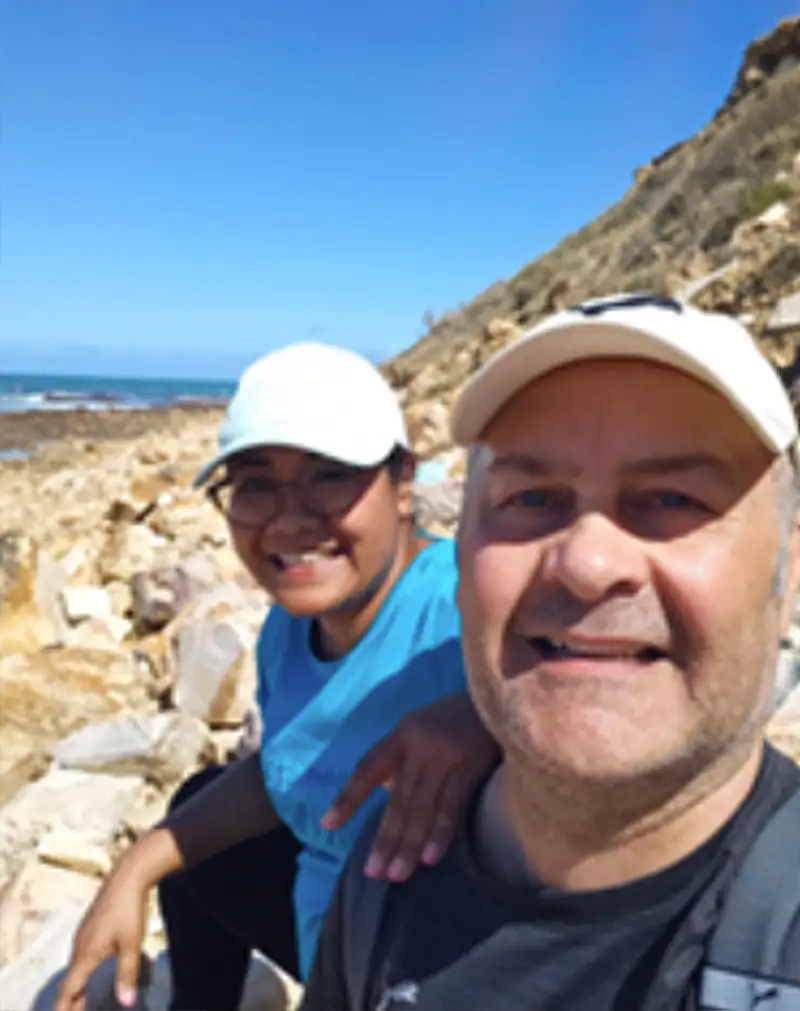
My Journey with Dilated Cardiomyopathy
Hi, my name is Dino, and I’m from Adelaide. I’m 51 years old, and was diagnosed with Idiopathic Dilated Cardiomyopathy in 2024. This is my story.
Early Symptoms and Diagnosis
In early 2024, I started noticing shortness of breath during everyday activities. Sometimes it happened while digging in the garden, other times while sitting at my desk or even just relaxing on the couch watching TV. It didn’t seem normal. My GP did blood and calcium score tests – all came back normal. My symptoms mostly resolved so we didn’t investigate further.
Later that year, my shortness of breath returned, this time accompanied by a nasty productive cough which made it difficult to breathe at night. My heart rate had been consistently sitting in the 100s. Further tests were ordered, including an ECG and a chest scan. After reviewing the results, diuretics were prescribed and it was highly recommended I see a cardiologist and have an echocardiogram as soon as possible.
My wife and I walked into the cardiology appointment and the doctor explained bluntly that I had Idiopathic Dilated Cardiomyopathy, with an ejection fraction (LVEF) of 16% and a severely dilated LV measuring 8.1cm. I was told it would be treated with an array of medication, but if they didn’t work I would need a heart transplant.
When home I made the mistake of Googling my condition, which only added to my anxiety. It was a lot to process, and it felt like my world had been turned upside down. At just 49 years old, I was being told I had heart failure, possibly caused by a virus that had attacked my heart, and that a heart transplant might be in my future.
Finding the Right Medical Team
With multiple follow-up appointments over the following months, I realised the cardiologist and I weren’t the right fit, and I obtained a referral to another doctor. From the moment I met her, I felt at ease. She was caring, compassionate, empathetic and easy to talk to. She took the time to explain my condition in detail, answered all my questions thoroughly, and treated me like a person, not just another number. I call my cardiologist “Queen of Hearts”. She carefully reviewed my results, adjusted my treatment plan and ordered additional testing to ensure the best possible care. She also recommended having an ICD (implantable cardioverter defibrillator) implanted to help manage my condition. Her approach gave me a renewed sense of hope and confidence in my care.
The ICD procedure went smoothly, and I now have another amazing cardiologist as part of my medical team. I feel incredibly fortunate to have found such a supportive and skilled group of doctors who genuinely care about my health and wellbeing.
Since then, I’m pleased to say my condition has continued to improve.
Things I’ve learned
As I reflect on my journey, I realise how important it is to share what I’ve learned with others who may be navigating similar challenges. Looking back, I’ve learned a lot from my experience, and I would like to share some advice for others who may be facing similar challenges. My advice to anyone facing this condition is to stick to the plan provided by your cardiologist and medical team. Follow their recommendations for medications, diet, and lifestyle changes – these can make a significant difference with your progress.
If you feel uneasy with your medical team, aren’t getting your questions answered, or feel like another number, don’t hesitate to seek a second opinion. Reach out to the cardiomyopathy community in your area – eg through CMANZ – for advice on cardiologists with good rapport. It’s hard enough to battle this condition in the first instance, but doing so without good support is not enough.
Remember, you are not alone in this journey – there is support available, and with the right care and mindset, progress is possible.
Reflecting on the past two years, my journey with cardiomyopathy has been both challenging and rewarding. Thanks to the right medical team, a positive mindset and a commitment to following my treatment plan, I’ve made incredible progress. I remain hopeful for continued improvement and am deeply grateful for the support I’ve received along the way.