Cardiomyopathy isn’t one condition, but a group of conditions that change the structure of the heart and affect how well it pumps blood around the body. It is estimated that up to 1 in 250 people have cardiomyopathy. It can affect people of any age.
Cardiomyopathy Australia New Zealand (CMANZ) is the only not-for-profit solely focused on supporting and advocating for individuals impacted by cardiomyopathy in Australia and New Zealand.
Provide support, information, and advocacy for individuals impacted by cardiomyopathy including those living with cardiomyopathy, families, and caregivers
Promote knowledge and understanding of cardiomyopathy among the public, healthcare professionals, and stakeholders
Advocate for the recognition of cardiomyopathy as a significant health concern and for improved resources for raising awareness, prevention, diagnosis, treatment, and support
Support research initiatives aimed at advancing understanding, diagnosis, and treatment options for cardiomyopathy
Collaborate with organisations and stakeholders to address the needs of individuals affected by cardiomyopathy
Our big-hearted supporters
Support us
By helping and supporting each other, people with cardiomyopathy can live a good and fulfilling life
My Hypertrophic Cardiomyopathy Story Hi, my name is Jodie. I am 35 years old. I am a Disability Support Worker and qualified Teachers Aide. I love my family, volunteering with
My Journey with Dilated Cardiomyopathy Hi, my name is Dino, and I’m from Adelaide. I’m 51 years old, and was diagnosed with Idiopathic Dilated Cardiomyopathy in 2024. This is my
Leo’s Story – Living with ATTR Wild-Type Amyloidosis Hi, my name is Leo and I am living with ATTR wild-type amyloidosis. It is a rare disease where abnormal proteins called
Hello! My name is Jessie and I have hypertrophic cardiomyopathy. What led to your diagnosis? What has happened since then? Growing up, I was very active and played a lot
Cardiomyopathy can affect children, adults and older people
Cardiomyopathy can affect people of all ages, including children, working-age adults and older people, depending on the underlying type and cause.
Many people with cardiomyopathy have no symptoms in the early stages
Many people with cardiomyopathy have few or no symptoms in the early stages, and the condition may be detected through imaging, routine tests, or family screening.
Genetics plays a role in many cardiomyopathies
Many cardiomyopathies have a genetic component, and inherited forms are common in conditions such as hypertrophic, dilated and arrhythmogenic cardiomyopathy.
Many people with cardiomyopathy live full and active lives
With appropriate diagnosis, monitoring and treatment, many people with cardiomyopathy are able to live full and active lives.
Early diagnosis and regular follow-up can improve quality of life
Early diagnosis, risk assessment and regular follow-up are central to cardiomyopathy care and can help improve quality of life and long-term outcomes.
News & Events
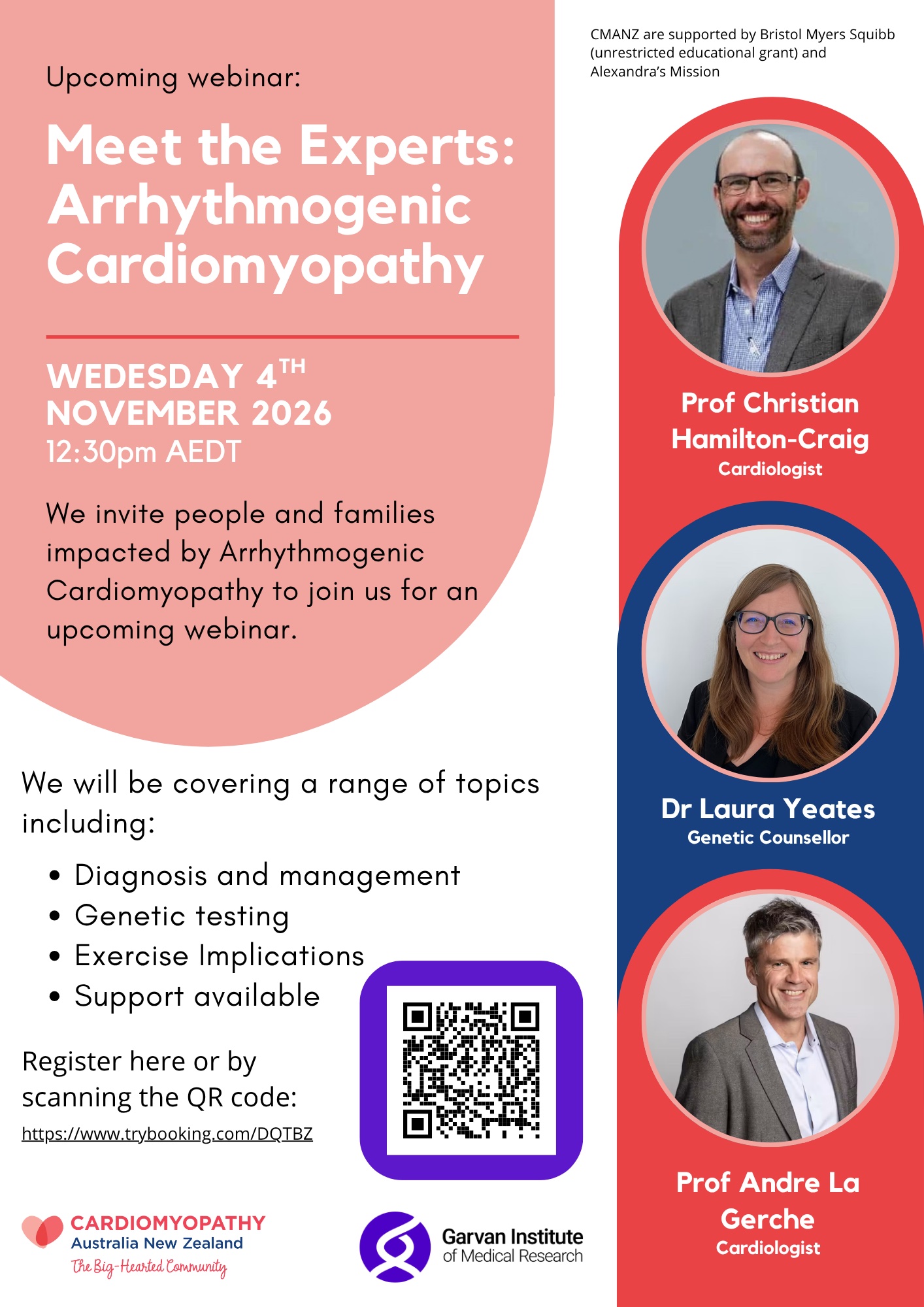
Arrhythmogenic Cardiomyopathy Webinar: Meet the Experts Nov 4